

Back in Black
A Little Bit of History

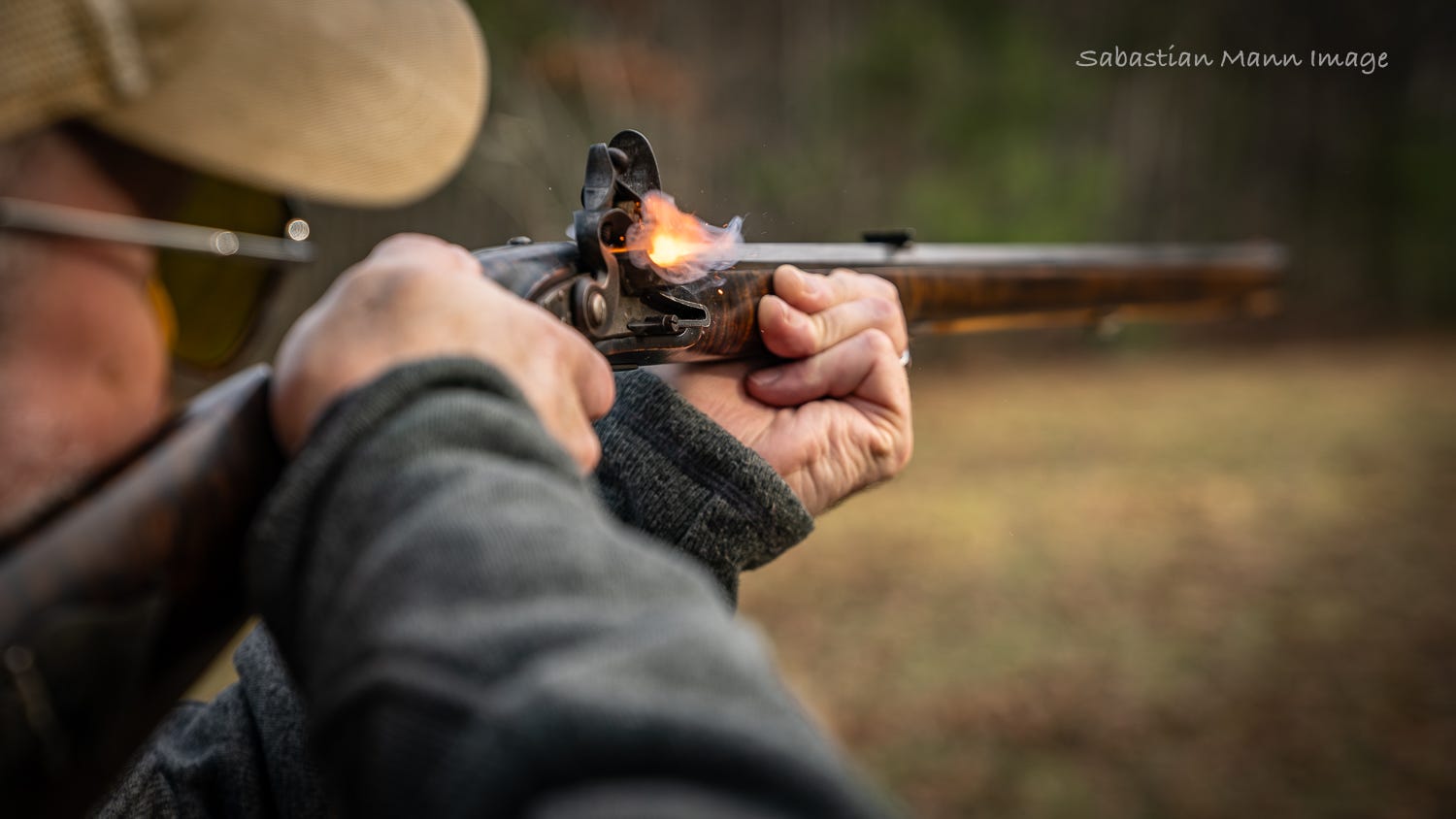
Back when I was 20 years old, fresh out of basic training and AIT—OSUT—for the Army National Guard, I was really involved in shooting and hunting with muzzleloading rifles. I’m not talking about in-line muzzleloaders, I’m talking about traditional flint and cap-lock rifles. I was fortunate in that my cousin and best friend Johnny Walker was descended from a long line of rifle builders with a storied history. Not only could Johnny build traditionally styled muzzle loading rifles, but he also knew how to load them correctly, which is something few shooters—even muzzleloader shooters—know how to do.
Believe it or not, when I was 20 years old he and I met with the board of directors for the 2300 acre Lake Stephens Park in Raleigh County, WV, which contained a 270 acre lake, and we convinced them to let us build a muzzleloading rifle range on the property for the muzzleloading rifle club—The New River Mountain Rifle Association—we had just recently founded. That accomplishment somehow propelled me to the position of president of that organization, and for the next several years we held monthly muzzleloading rifle competitions on that range. The range was very rustic, and it was also cool that you could access it by road or by the lake in a canoe.
At that time the standard for muzzleloading rifle competitions was to shoot bullseye targets at various ranges. Though moderately fun, it was also moderately boring, especially for a young man who had just received his certification as an armor crewman for the US Army. So, I put together a shooting match that might best be described as a cross between a combat match and Dungeons and Dragons game, and it was a hell of a lot of fun.
Contestants were presented with life size Indian targets from near the muzzle out to around 70 yards. The Indians were armed with various weapons including everything from a tomahawk to a bow, and one even had a fair maiden held hostage with a Bowie knife. The shooter could attack the course in whatever way they saw fit. Their only guidance was to kill all the Indians in the most practical order and way possible. I served as the range master, and not only were points awarded for hits, but additional points were awarded or subtracted for shooting the Indians in the most or least practical order based on which one was the most threatening. It was challenging, stressful, and a huge success.

All this muzzleloading experience was a great help to me when I began writing regularly for gun and hunting magazines because that was at about the same time that in-line muzzleloaders were just becoming hot. I wrote a lot about in-line and traditional muzzleloaders, and I shot and hunted with enough of them to learn that they could not compete with the precision of a traditional muzzleloader with a barrel rifled the old way and loaded with real black powder. None of the modern black powder substitutes are anywhere near as consistent as real black powder, and I don’t think I ever shot an in-line muzzleloader that could shoot better than those Johnny Walker builds. Farther? Yes. Better? No.


Most of that was a long time ago and my last real outing with a muzzleloading rifle of note was in 2004 when I won the West Virginia Muzzleloading Offhand Championship, with one of Walker’s rifles that he had used to win the same match the previous year. Yeah, I’ll take my hand rifled East Tennessee styled Walker built rifle out once or twice each year, but it’s mostly a nostalgia hunt, and I use most of the time in the woods with it to remember the good old days.
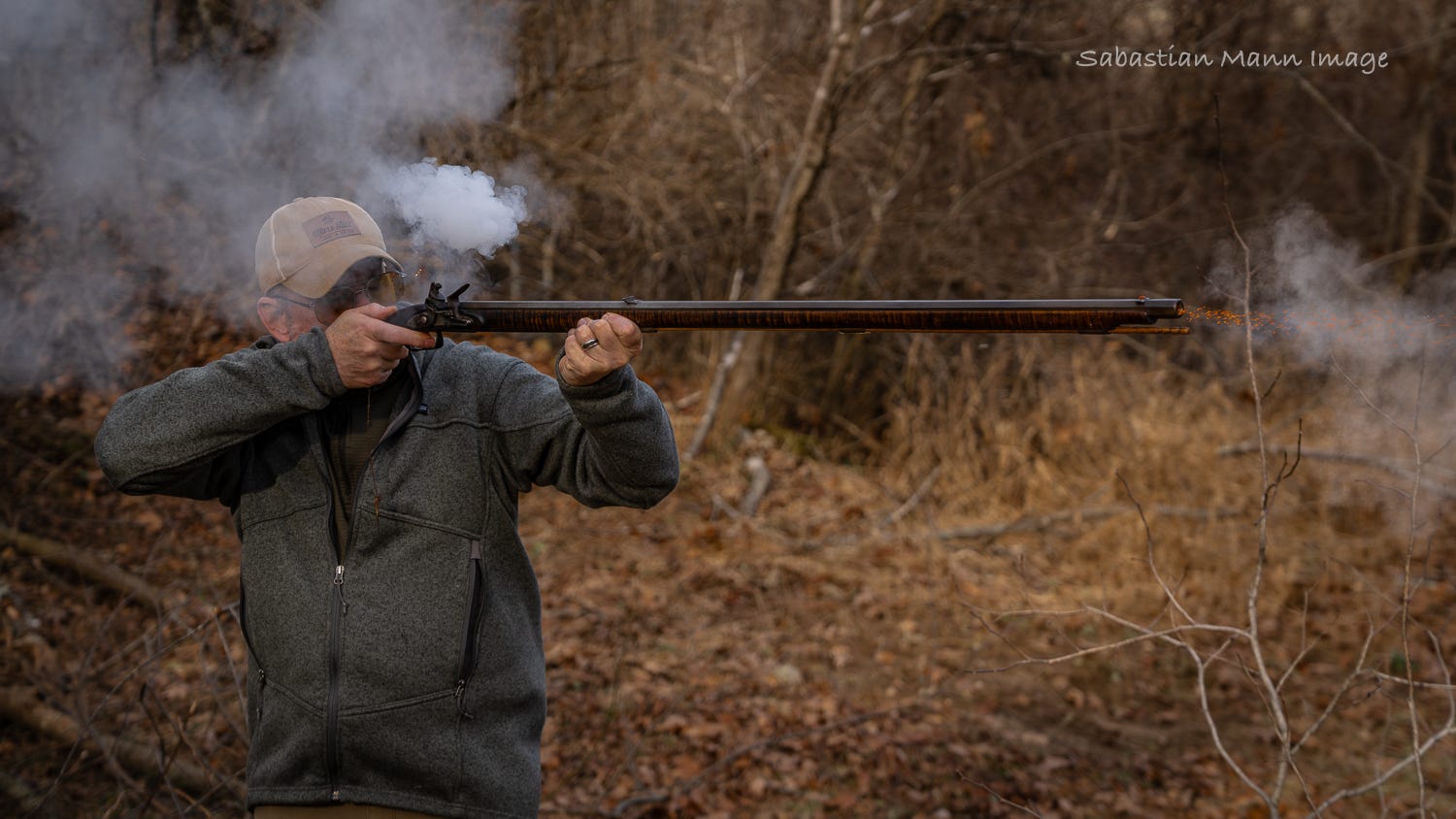
I mention all this because yesterday Walker came over with several of his rifles to help me do some research and testing for an article I am writing on Flintlock rifle precision. We had a great time shooting and reminiscing about our early days of building a rifle range and running a muzzleloading rifle club, and when all the smoke cleared and Johnny left, it hit me just how much my early days with long rifles and black powder shaped my future.
And now you know a little bit more about me and my shooting history than you did. Back in the day, the powder was black and there was a lot of smoke. Sometimes I miss both.
Richard,
I thought this may interest you.. I can attest to the fact that a hand-rifled flintlock traditional muzzleloading rifle will shoot extremely well. I used to shoot competition muzzleloading myself (dad still does) at a club called Potomac Valley Muzzleloaders, where they also shoot bullseye and animal targets from 25 to 100 yds; while most are side lock percussion at this club (hence less flinch lol.. a flint will cure this or make it worse for sure though!) and as one of the top shooters there told me once quote “I will shoot an open iron sight traditional muzzleloader at paper bullseye and or animal targets from 25 to 100 yds either bench, but especially offhand against anyone with a scoped or un scoped inline muzzleloader on any given day”. I will say from my experiences I could not agree more they are that darn accurate and good (especially like the hand built ones) period!!
Mike Venturino penned an article in the ‘90s IIRC about the inherent accuracy of black powder cartridges. I believe what it boiled down to was its extremely low and consistent velocity spreads commonly in the single digits. According to Venturino this is why those 500 grain bullets started at 1200-1300 fps are so deadly at extreme distances.