

Rotational Velocity
An overlooked aspect of terminal performance

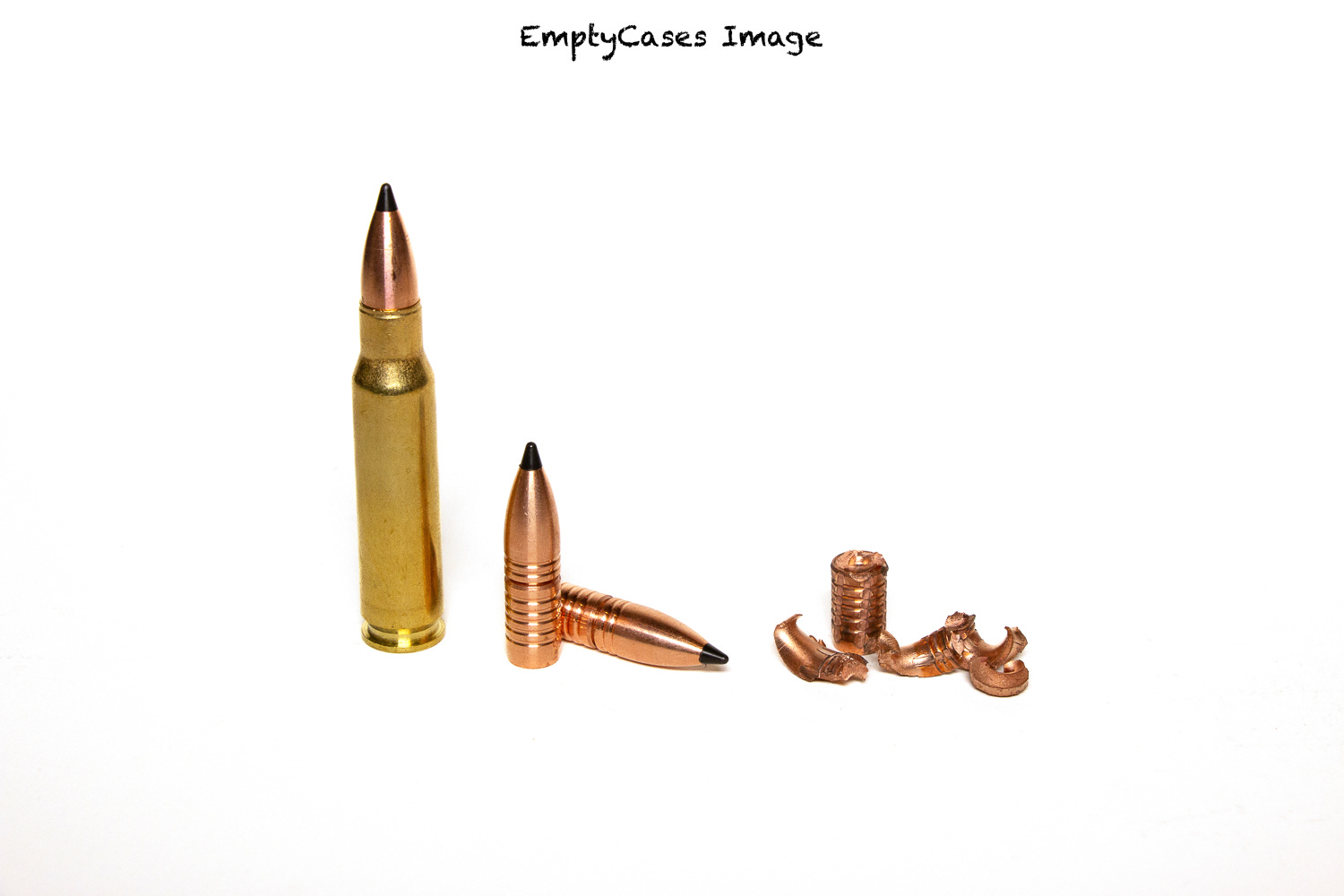
Since I just published a book about rifle cartridges, it might surprise you to learn I’m even more obsessed with the terminal performance of bullets. This probably explains why my first book, which was a collaboration with Craig Boddington, John Barsness, John Haviland, and Bryce Towsley, and that was edited by Dave Campbell, was about rifle bullets. As a clue, within the chapter on the 270 Winchester in Rifle Cartridges for the Hunter, I wrote:
“The next thing that amazed me was that the 150-grain Winchester Silvertip bullet had failed to exit the doe, which probably only weighted about 130 pounds. I tried to find the bullet as I field dressed her but never did, and from that began my infatuation with the terminal performance of bullets. Ever since that day I’ve conducted what you might call an autopsy on almost every big game animal I’ve taken and on a passel of critters others have killed.”
In the Substack article I recently published, Velocity or BC, I wrote, “The necessary impact velocities will vary from bullet to bullet and in some instances by caliber. However, as a rule, generally and with exceptions, bullets—by type—work best when they impact at the below listed velocities for faster.”
Conventional cup and core bullets: 1600 fps+
Partitioned and bonded bullets: 1800 fps+
Mono-metal bullets: 2000 fps+

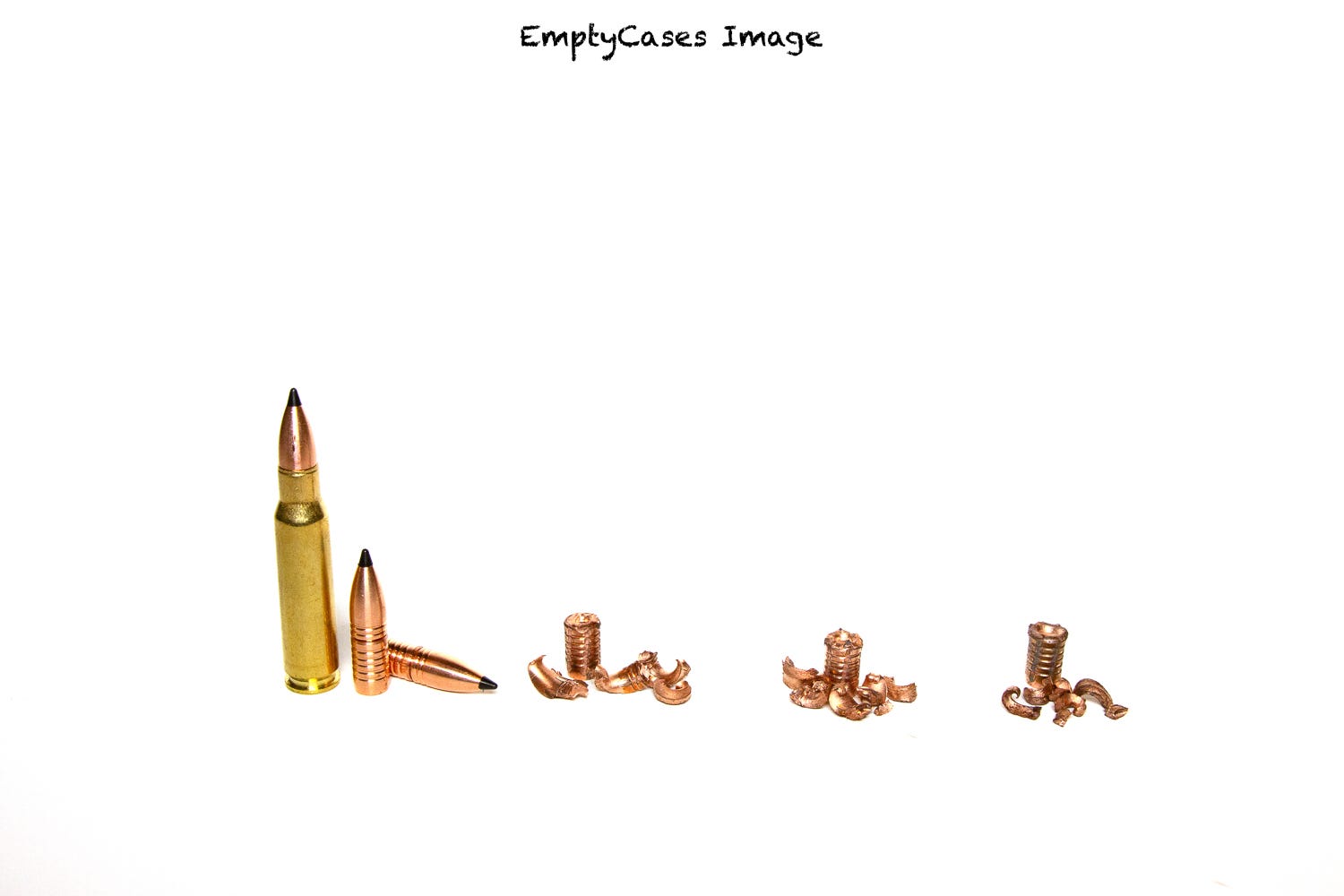
Bill Wilson who owns Lehigh Defense reached out to me and told me that based on his testing, most of the mono-metal Lehigh Defense bullets like the Controlled Chaos, Tipped Controlled Chaos, and Tipped Xtreme Chaos, will fracture or upset at velocities of 1700 fps or less. I knew the Controlled Chaos bullets would work at speeds a bit slower than 2000 fps, which is why I included “with exceptions” in the article, but I did not know their minimum required velocity for upset.
