

Switching Truck Guns
Rifle Cartridge to Pistol Cartridge

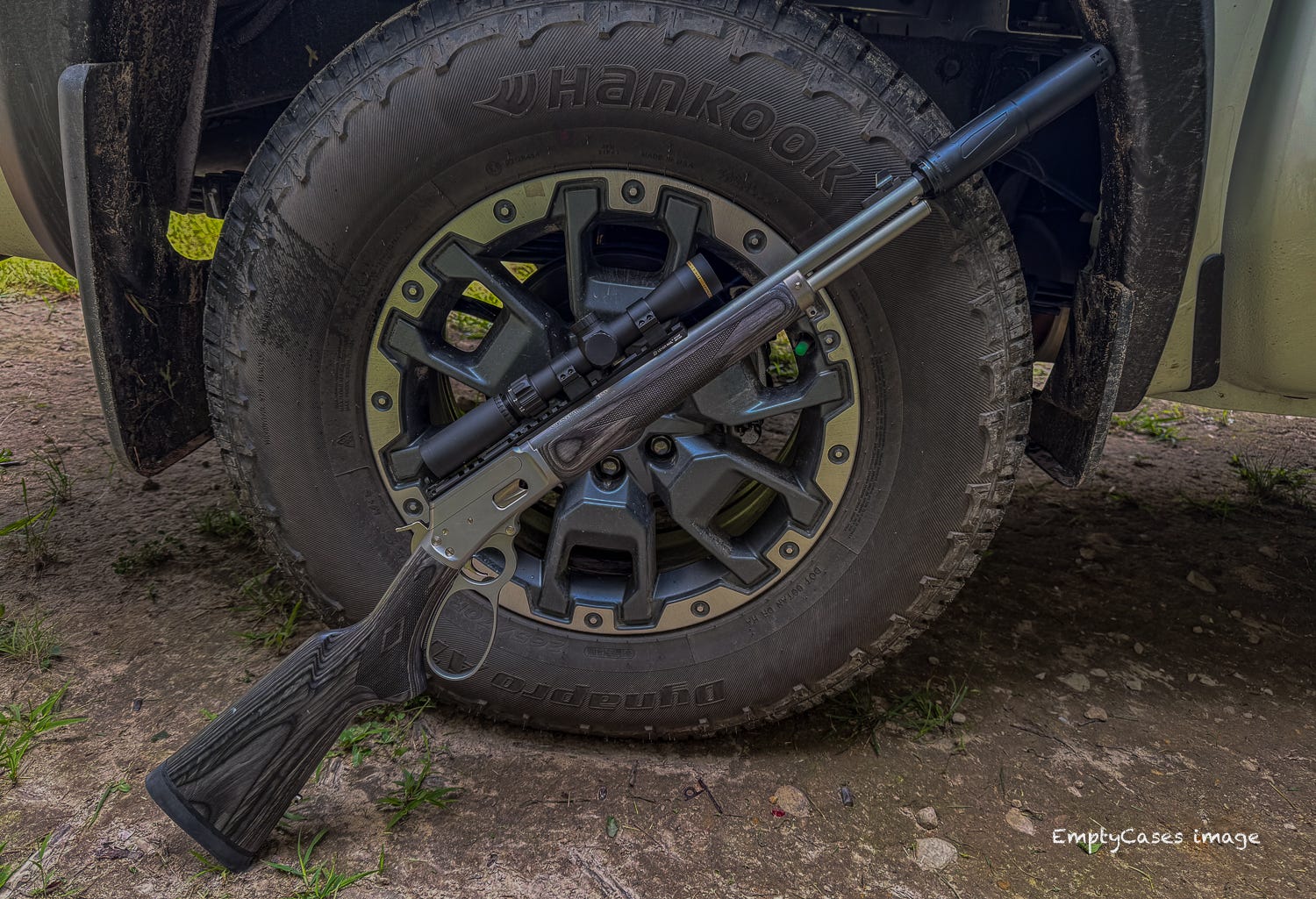
Back before Remington filed for bankruptcy in 2020, I knew Remington-owned Marlin engineers were working on a 10mm Auto lever action carbine, so I was not surprised at all when it was introduced last year. Also, beyond the fact that it was the first lever action rifle chambered for the 10mm Automatic cartridge, I was not all that excited about it. However, I understood the appeal. Since the death of the 40 S&W—after the FBI went back to the 9mm Luger and most law enforcement agencies followed—we’ve seen a resurgence in interest in the 10mm. With the popularity of 10mm handguns, shooters could now have a 10mm rifle/carbine that would share ammunition.
I received one of the first Marlin 1894 Trapper 10mm carbines for testing last October and was a bit underwhelmed with the rifle for two reasons. First, there were some feeding and ejection issues, and you can read the full review of that rifle HERE. Secondly, unlike 1894s chambered for revolver cartridges like the 357 and 44 Magnum, the 10mm Automatic cartridge does not benefit much from a 16-inch barrel. On average you will only see a velocity increase of about 100 feet per second.
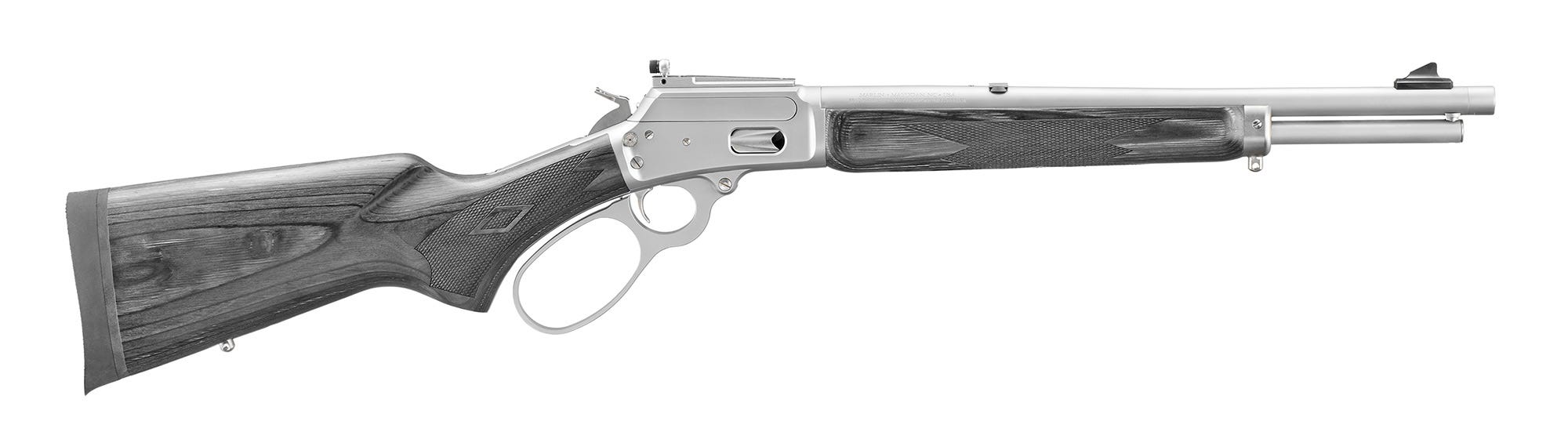
About six months later Dead Air suppressors sent me one of their new 9mm/10mm suppressors to test. Through a partnership with Ruger this is a Ruger branded suppressor called the Ruger RXD 910Ti. As part of that review, Dead Air and Ruger provided another Marlin 1894 in 10mm Automatic to use with the testing of that suppressor. You can read the full review of that suppressor HERE, but most importantly the newer version of the 1894 in 10mm Auto performed flawlessly. Maybe my original 1894 in 10mm was built on a Monday, or maybe Marlin worked out some of the kinks. Regardless I was very impressed with the second gun.
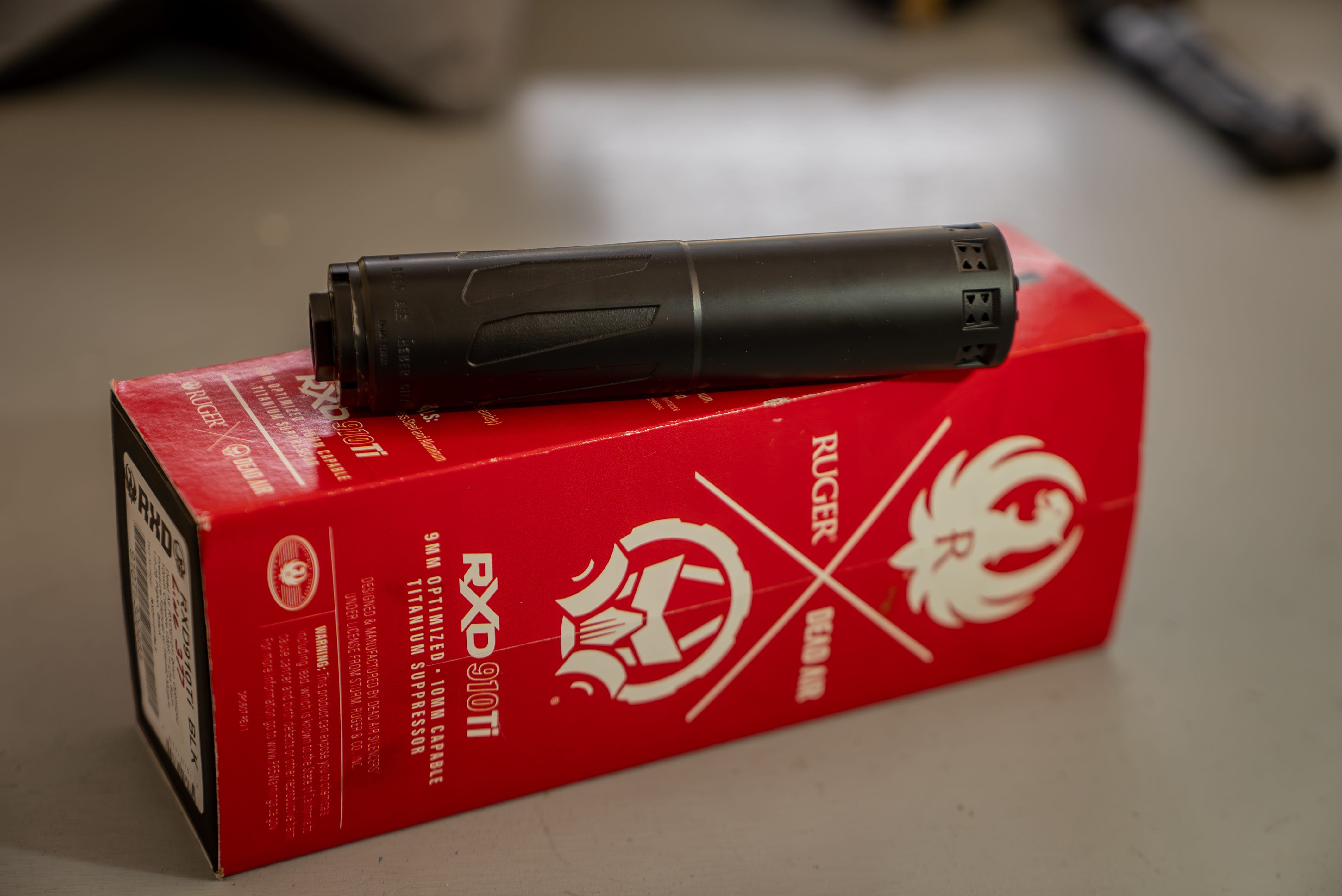
Additionally, I come to appreciate the fact that a 10mm Automatic cartridge with a 16-inch barrel did not show a substantial velocity increase. This handy little carbine is not in any way a long range rifle. As configured, with the short barrel and the Skinner aperture sights it comes with, it is most practically a 100 yard gun. I conducted some extensive terminal performance testing with the rifle and 10 different 10mm Auto loads, and what I found was that in most cases you could expect the terminal performance at 50 yards from the carbine to equal the terminal performance from a handgun at about 10 to 15 yards.
Two of the best terminally performing loads out of the carbine were the 200-grain Federal Power-Shok and the 200-grain Federal Punch. At 50 yards, both penetrated about 20 inches in blocks of Clear Ballistics and the bullets deformed with a frontal diameter of around 0.625-inch with crush cavities slightly larger than six cubic inches. I preferred the Power-Shok load because out of the rifle it’s muzzle velocity was only 1077 fps, which is subsonic and very quiet when the RXD 910Ti suppressor was installed. This load would be more than sufficient for deer or bear and just as applicable for personal protection.
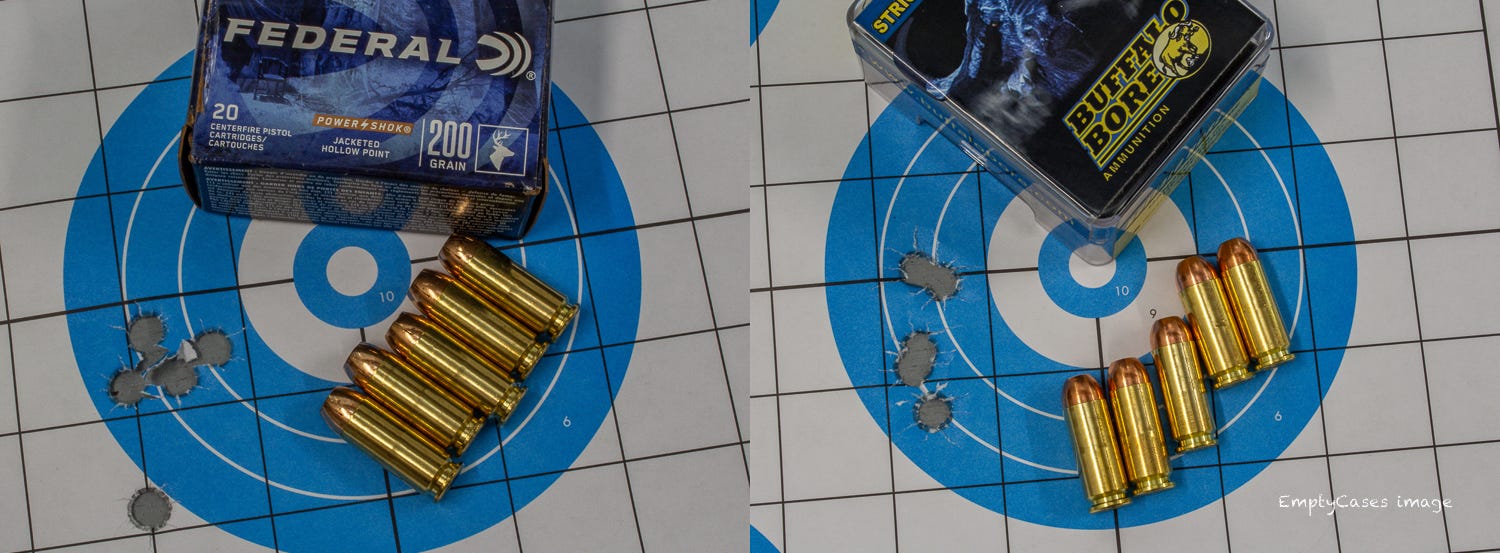
Another load that I really liked was the Buffalo Bore lead-free Dangerous Game load. It utilizes a 190-grain all copper monolithic bullet designed for deep penetration. It reliably pushed to around three-feet in blocks of Clear Ballistics but just as importantly, five-shot groups at 50 yards averaged less than 1.5 inches. Generally, I prefer hardcast bullets for tasks where deep penetration is needed but neither of the bullets used in the Buffalo Bore 220-grain hardcast load or the Federal 200-grain Solid Core load are gas-checked. With a muzzle velocities of more than 1300 fps, both shot groups larger than two inches at 50 yards. Additionally, if I needed to shoot through hard barriers, the monolithic all-copper bullet would show less deformation.
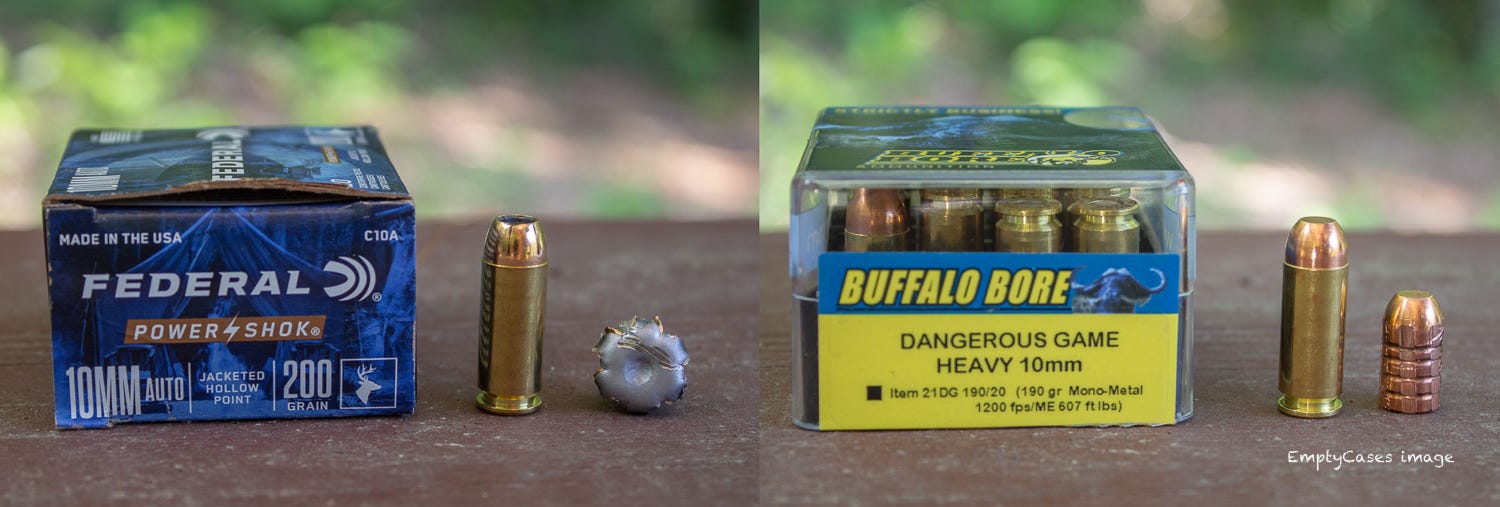
All this made me think that this little carbine would make an ideal truck gun capable of suiting my needs here in West Virginia where I mostly drive my truck. Entangled in some sort of bad situation involving bad people or bad critters, with its 10-round capacity it could get the job done. Additionally, if I was knotted up away from home in some sort of natural disaster it could admirably serve as well. Though both are low probability circumstances, if your life is anything like mine Murphy seems to always be following you around. What I mostly wanted a truck gun for was when I’m at my remotely located cabin and might need to deal with a bad bear, bad critters, or bad people doing bad things. And finally, with the new CCI Shot Shell load in 10mm, it would be perfect for dealing with venomous snakes—unsuppressed of course—at a greater distance than what those shells will allow with a handgun.
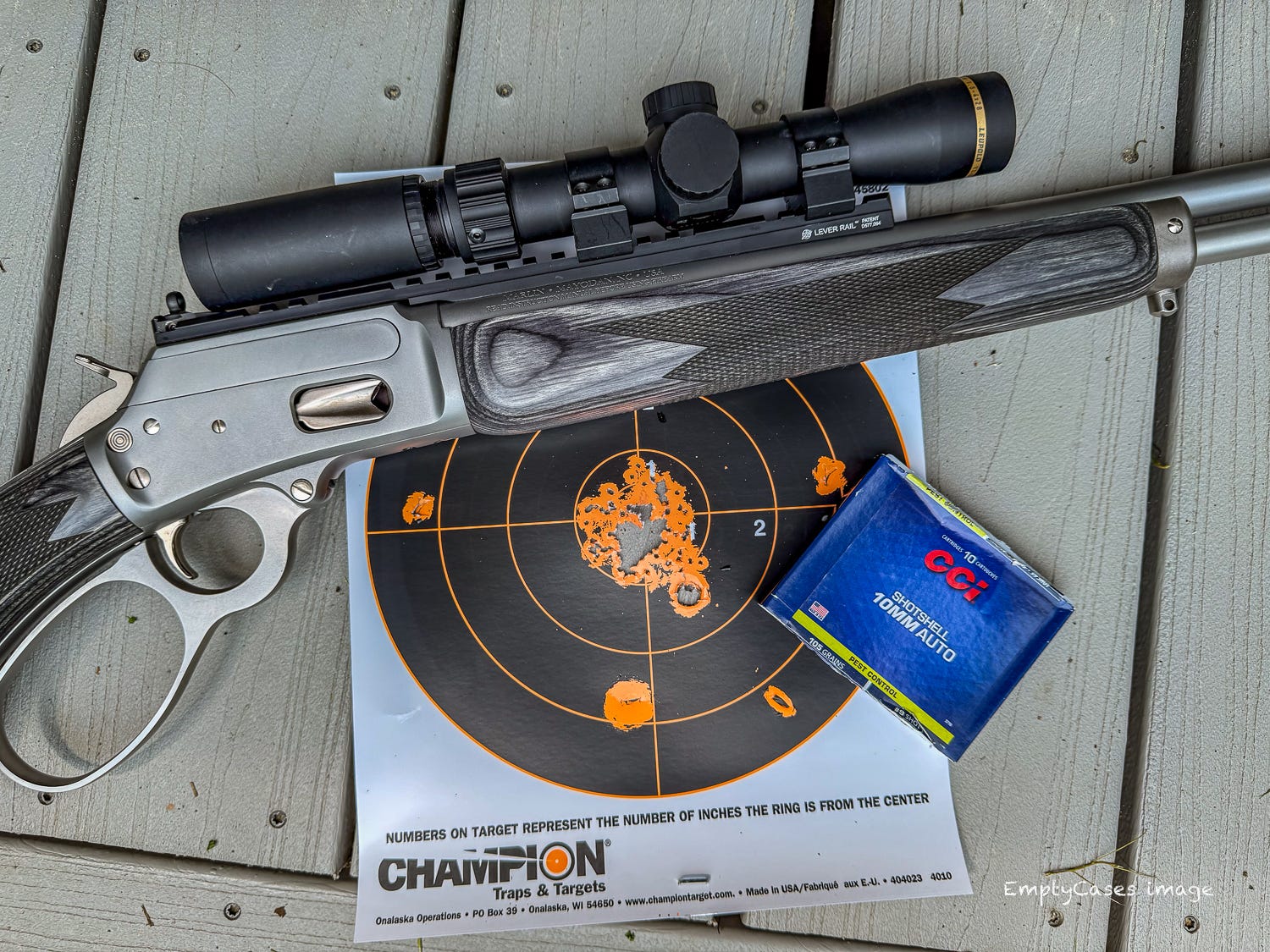
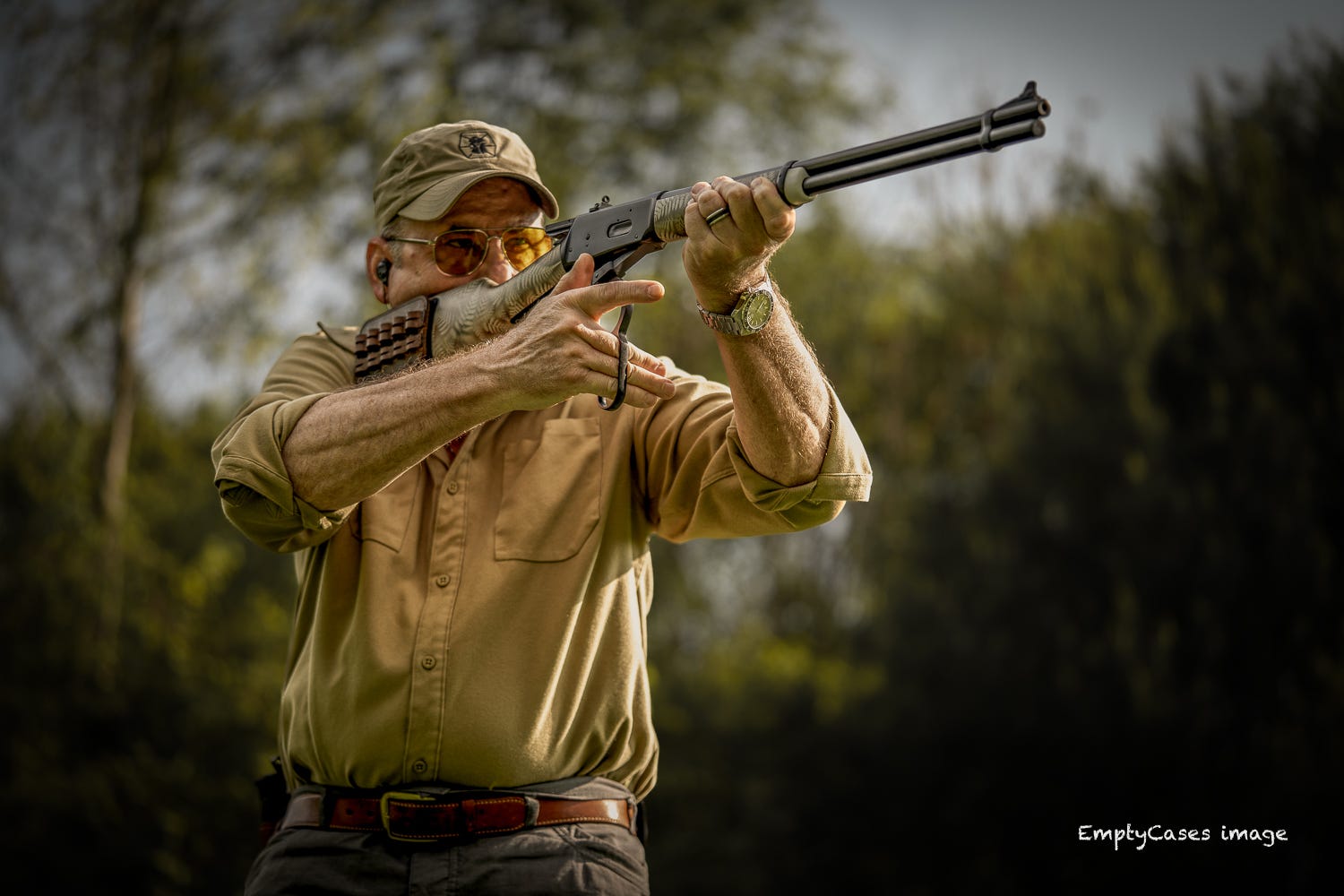
For years I’ve carried a Winchester 94 in 30-30 Winchester as my truck gun. I got the rough looking rifle for almost nothing and Jerry Dove at Dove’s Custom Guns refinished it, smoothed up the action, tuned the trigger, and installed an XS aperture sight and a white stripped front sight. The problems with this rifle are that it is more powerful than what I need for the most common problems I’d need to address with a truck gun, it’s not suppressor friendly, shot shells are not an option, and I’d like the alternative of an optical sight in addition to the open sights. So, I thought I’d see if I could turn the compact 10mm 1894 into a truck gun.
The first thing I did was order a Lever Rail from XS Sights so I could mount a scope on the rifle. Previously, I’d tried a Skinner Sights aperture sight that has integral slots for Talley rings. It worked but the little 2.5X Leupold had to be mounted very high to clear the aperture sight. With the XS Lever Rail I could mount an intermediate eye relief scope much lower and forward of the aperture sight.
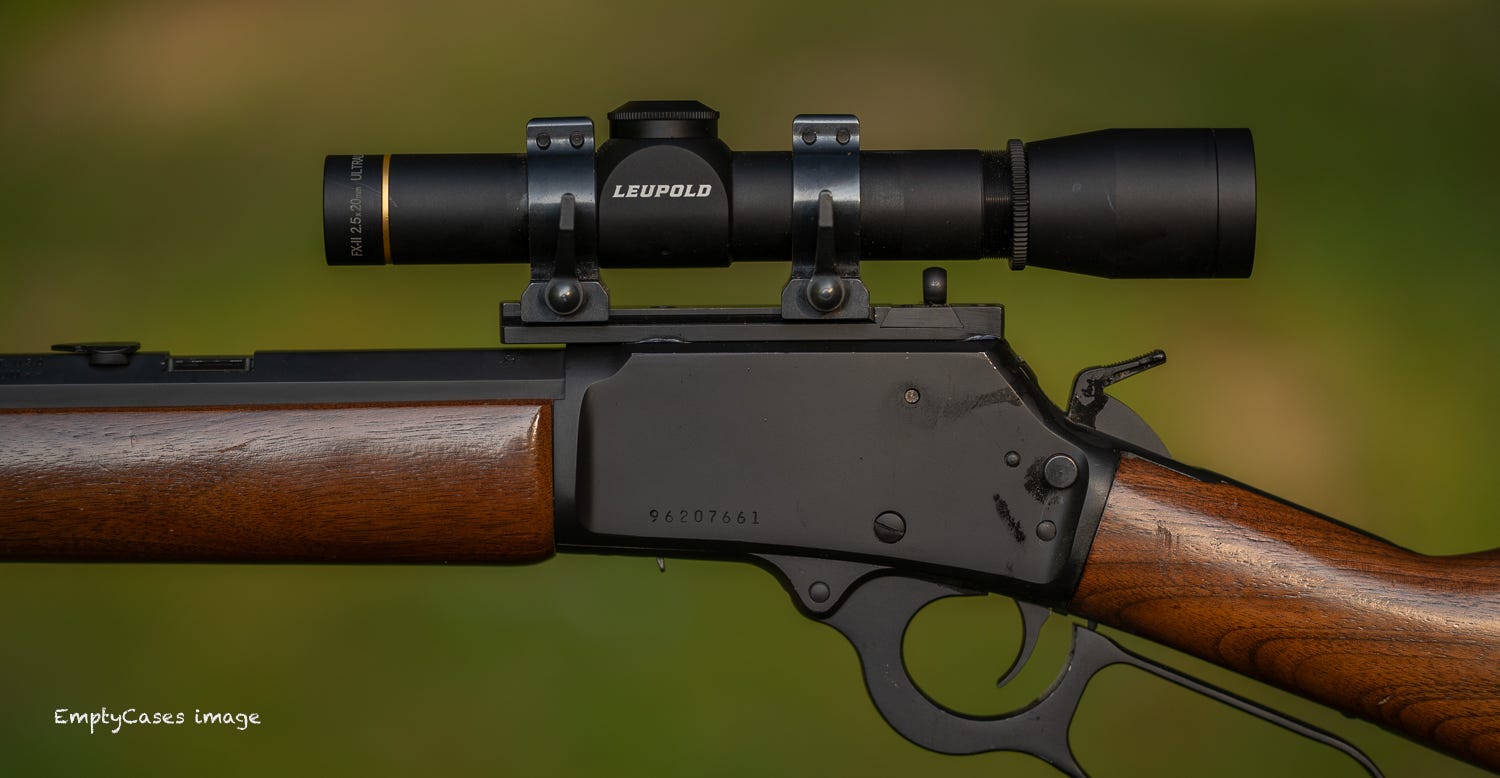
The Lever Rail worked perfectly—well almost. XS ships the Lever rail with a rear aperture sight and a white stripped front post sight intended to work with an 1894 chambered for 357 or 44 Magnum. The problem was the front sight was too low for the 10mm. I had a few XS front sights but those were for the older 1894s with a shorter hole spacing for mounting. I called XS Sights and talked with Bo Wallace, and we identified a dovetail base and front blade that would meet my needs, but there was another problem.
When I mounted the taller front sight, I noticed it was canted to the left. This meant the mounting holes in the barrel were not top dead center. With the shorter sight this was not noticeable, and this created another problem. With the top of the front blade to the left of center, I ran out of windage adjustment with the rear aperture sight. Ultimately, I had to go with a front blade that was a bit shorter and then position it just a tad off center in the front base with the rear sight adjusted as far left as possible to get the little carbine zeroed. Understand, this was not an issue with the XS Sights Lever Rail or sights. The problem was all because Marlin failed to drill the front sight mounting holes top dead center.
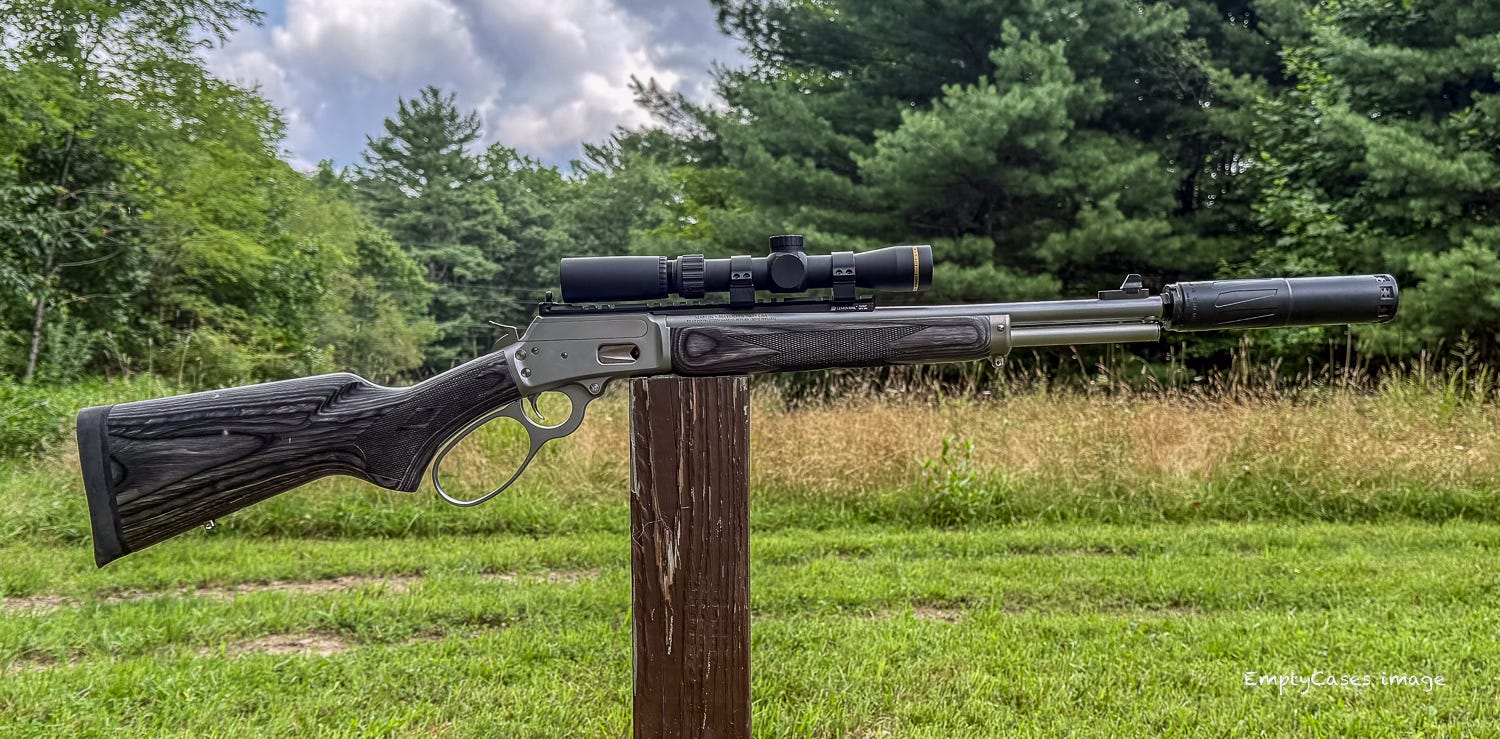
Finally, with the open sights sorted, I mounted a now sadly discontinued Leupold VX-Freedom 1.5-4X28 intermediate eye relief scope in a set of low Leupold QRW2 rings. With the Power-Shok and Buffalo Bore Dangerous Game loads zeroed at 50 yards, both impacted about five inches low at 100 yards. Now, in a matter of just seconds I can detach the optical sight and use the open sights, which are also zeroed dead on at 50 yards and the point of impact between the two loads is not enough to make any difference.
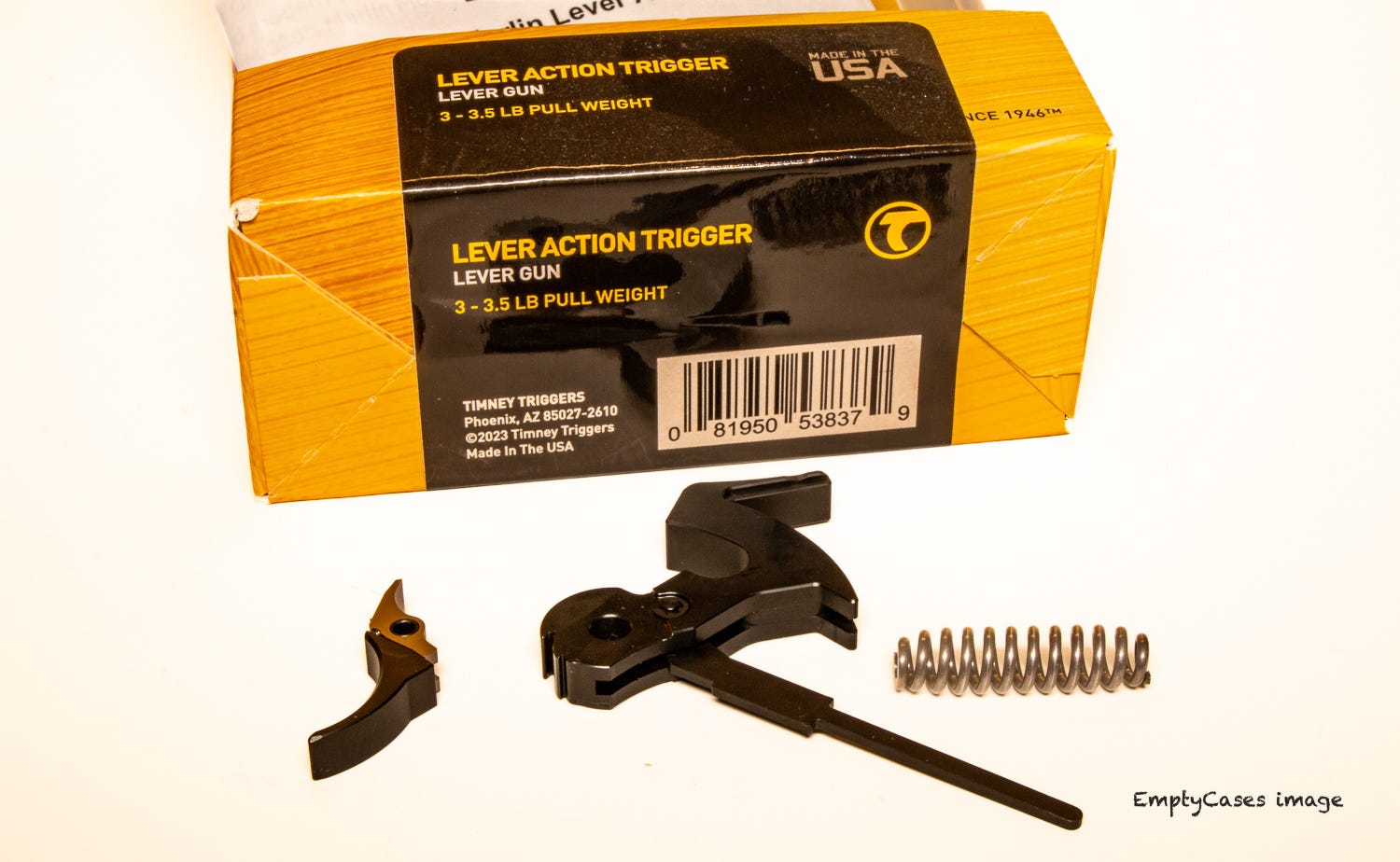
Aside from practical application, this rifle is a blast to shoot, with minimal noise and almost no recoil. Running a six-plate rack at 50 yards is a lot of fun and nearly addictive. All I need to do now is order one of Timney’s drop in triggers for a Marlin lever action rifle. The trigger on the 1894 is decent but based on the Timney lever gun triggers I’ve installed and worked with, it should be a lot better. And, I can install one in about 15 minutes and my new pistol-cartridge truck gun will be complete.
Transporting a Truck Gun
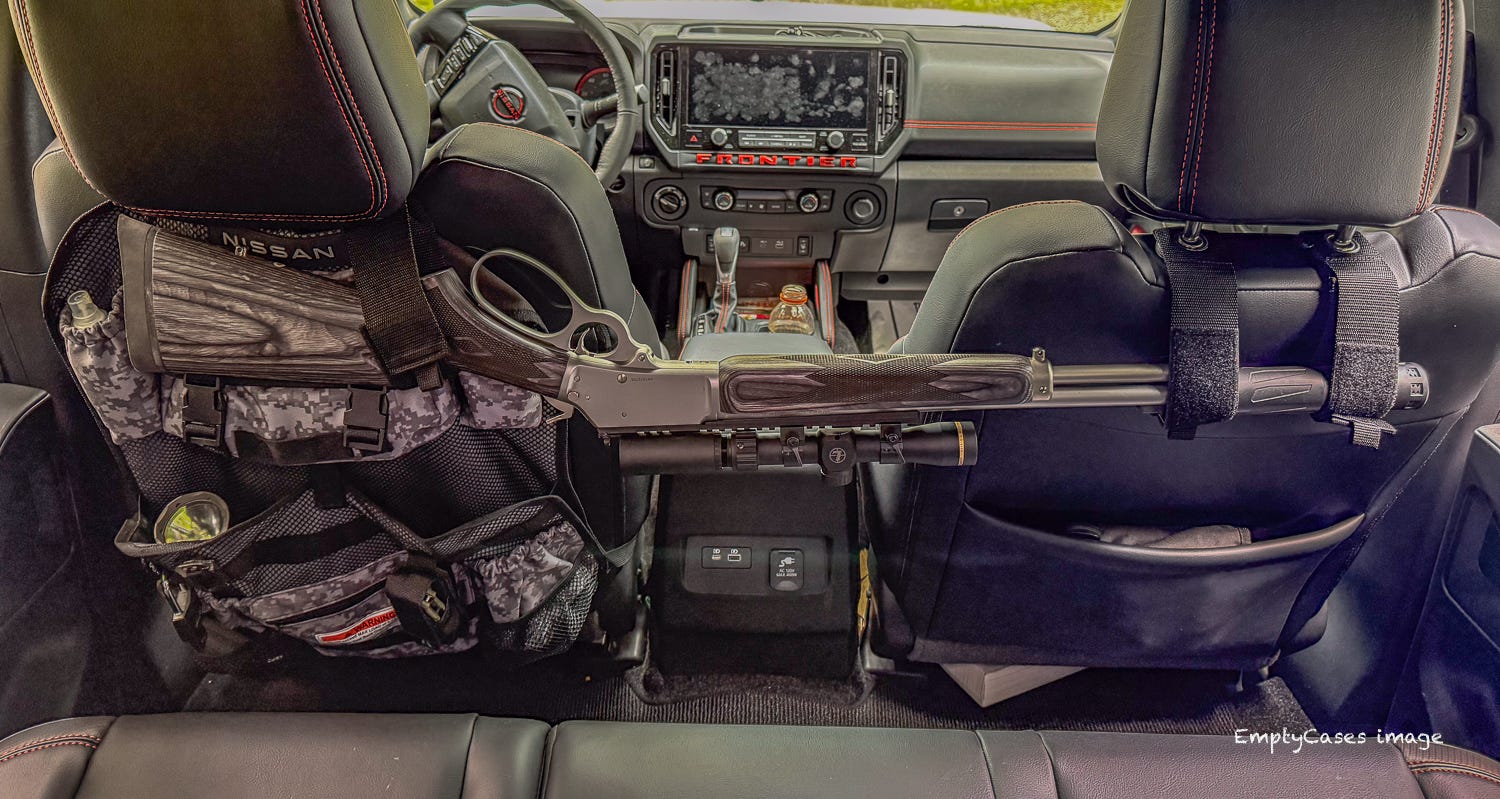
In my old truck I carried my truck gun in a zippered pouch on the front of a seat protector where my dog rode with me. It was hidden and inconspicuous. In my new truck I’ll generally keep it behind the seat in a case, but for convenience carry I have another option and this is something you might want to explore for rifle carry in your vehicle if you are in a situation where you might want fast access. It’s very affordable and I stumbled on it by accident.
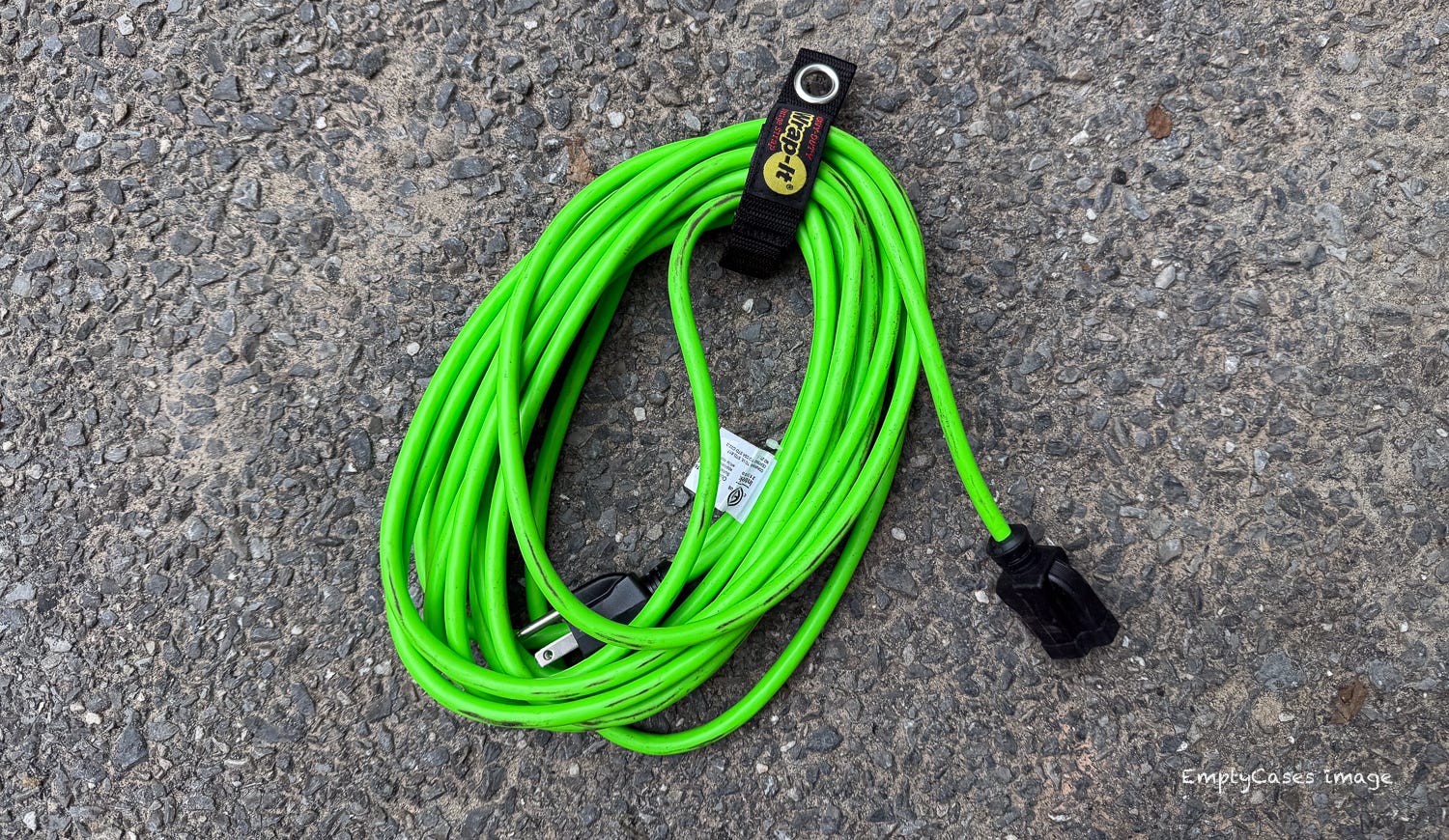
For my birthday my wife got me a box of WRAP-IT. They are designed to store and hang rope and extension cords on a wall. I found that the hanging hole is the perfect size for the rods on the bottom of my headrests. You just slip the headrest rod through the hole and the velcro strap hangs behind the seat. These WRAP-IT straps are great for cord or rope storage but they also work great for a behind the seat rifle rack. Not necessarily for long term every day carry, but ideal for on the farm, ranch, or when hunting when fast access is at a premium.

Those straps are handy for a variety of things.
What I found most useful about this article was the method to hang the rifle on the back of the front seats. That is pretty smart. Personally, my choice with that model would be in .44 Magnum. If I’m going to use a handgun cartridge in something with a 16” barrel, I want that extra ballistic advantage. I no longer have a 10mm anything, but I do have a bunch of .44’s.
I have installed the Timney trigger in a new RuMar Trapper in .44-70G; it really improved it. That is a good choice.
As to the issue of the front sight mounting holes being off-center, that is sad.