


The rifle is undeniably the tool that forged America and there was a time when rifleman skill was highly celebrated. In fact, rifleman skill has been so important to the American culture that it has been celebrated in fictional literature. In The Leatherstocking Tales, the exploits of Natty Bummpo—aka Hawkeye—and his rifle Killdeer became folkloric legend. The name Hawkeye became so pervasive it has long been used to describe a good shot, and it is now the name of Ruger’s flagship bolt action rifle. Of course, there was also the 1850 movie, Winchester ’73 and the 1990 classic, Quigley Down Under. Both celebrated the skill of the rifleman.
WATCH RIFLEMEN IN ACTION
The Last of the Mohicans
Winchester ‘73
Quigley Down Under
During the last two decades rifleman skills like these portrayed in print and film have deteriorated immensely, mostly because they are extremely difficult to obtain. This current long range precision game that essentially works to create a bench rest in the field is making real riflemen extinct because with it success is so much easier to find. Shooting a rifle fast and accurately without the aid of support is hard as hell, which is exactly why it has been respected and celebrated. (Hawkeye, Jimmy Stewart and Tom Selleck were not shooting from a tripod or sandbags.) The real rifleman—the type of man who made America and could shoot standing on his hind legs—is a vanishing breed.
I’ve never met Cade Cole, but we have communicated several times because I have been impressed by the messages he has been sharing. In person, Cade might smell bad and could possibly be a true gentlemen or a complete ass—we’ve never met—but I do respect his efforts to educate hunters and riflemen. He appears to be very practical, and he recently put out a message that ruffled some feathers.
“The real master of the rifle is one who can command it at will. Not at the mercy of tripods or sticks but as an extension of the body at its most capable, on your feet.”
Many of the comments on his post were ridiculous. Some clearly had no comprehension of the basic axiom of rifle shooting while others wanted to criticize his choice of weapon system—the Scout Rifle—that they did not understand. I wanted to elaborate on Cade’s words a bit, and I assume my comments may hurt some feelings too. After all, what Cade and I are professing goes against the primary marketing push associated with almost everything now related to hunting with a rifle.
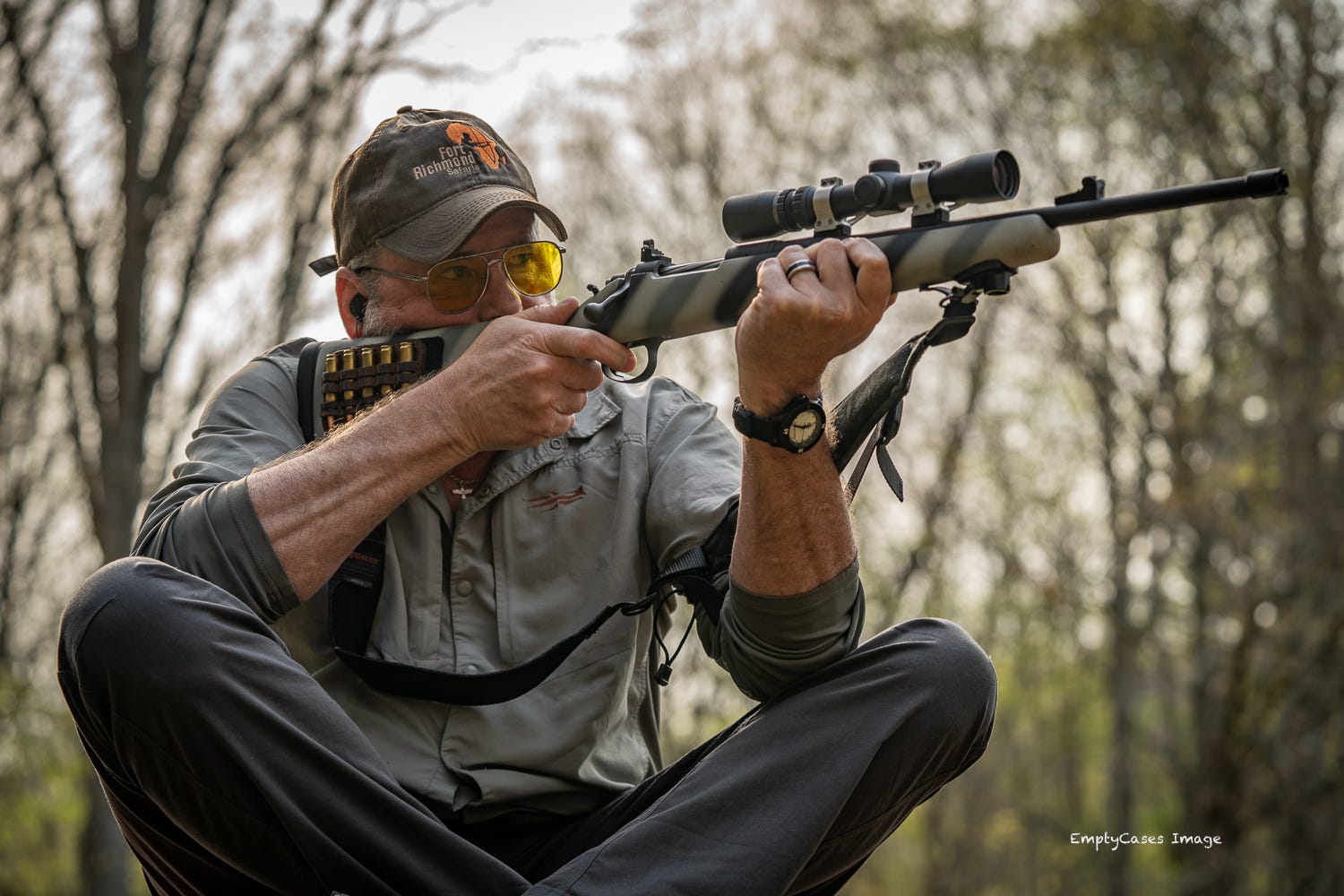
Merriam-Webster defines a rifleman as, “1: a soldier armed with a rifle, 2: one skilled in rifle shooting.” Regardless of your respect for dictionary definitions, by most accepted standards this is way too broad because it fails to define soldier, rifle, or what skilled means. To me it is mostly a description of someone who shoots a rifle. I would submit that Cade’s definition is much closer, though it still leaves the question of skill.
Additionally, those who disagreed with Cade’s assessment also seem oblivious to the primary axiom of rifle shooting which was most eloquently stated by Jeff Cooper in The Art of the Rifle: “If you can get closer, get closer; if you can get steadier, get steadier.” The world of rifle shooting we now live in puts so much focus on the latter that the former is almost completely disregarded. Many now believe the true measure of rifleman skill is the ability to solidly support a rifle with some sort of gadget, tripod and/or sandbags, and then connect at the furthest distance possible—the greater the distance, the higher the level of skill.
I partly blame this mindset on the movie American Sniper which is in no small part responsible for the current fascination of long range shooting. Though a subset of rifle shooting skill, supported long range shooting—at least as it relates to hunting—is mostly representative of a hunter’s failure or inability to get closer. Additionally, with a solidly supported rifle, the skill mostly lies in a shooter’s ability to judge wind and implement a shooting solution provided by a ballistic calculator. It has also become so popular because it is so much easier than shooting unsupported.
Why do we shoot from a solid rest? To eliminate human error. It’s why we do it when we are sighting in a rifle. Shooting from a solid rest is undeniably the antithesis of rifle shooting skill. In a matter of minutes, I can take a new shooter and with a solid rest have them connecting out to 500 yards and beyond with less than a single box of ammunition.
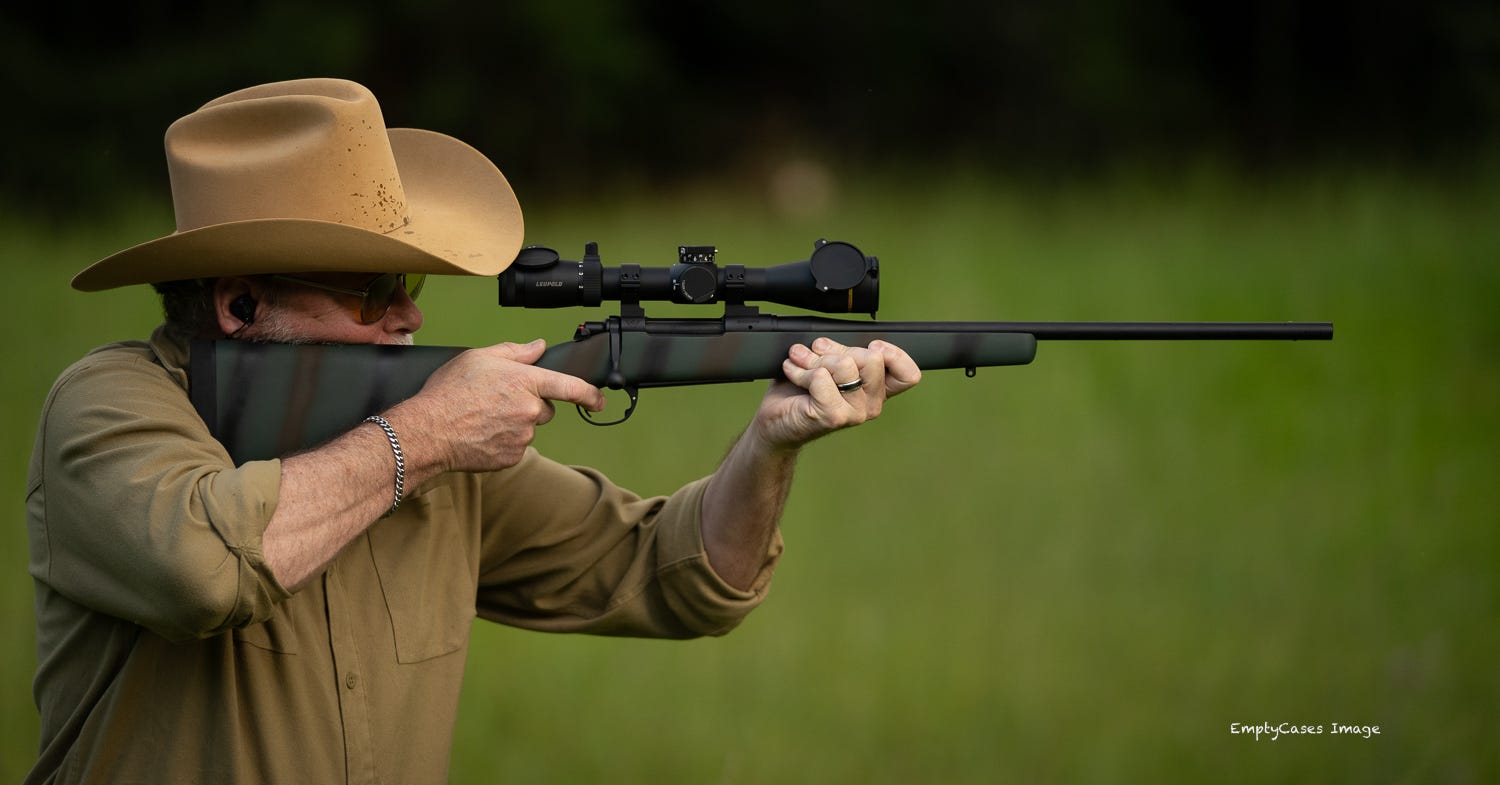
The real rifleman implements the axiom Cooper expressed to the best of their ability. The primary mission is to get closer—close enough the shot is a sure thing—and the second mission is to get as steady as possible. Part of getting closer can mean moving to a spot that will afford the best stability, and part of getting steadier means using whatever means are at your disposal. However, none of this circumvents the importance of being able to shoot a rifle accurately, unsupported. The better you can shoot a rifle unsupported, the better you can shoot a rifle from a rest. The real rifleman can eliminate a vast amount of human error with his body as opposed to using supporting implements.
None of this negates the importance of the implementation of shooting supports to help a hunter or rifleman get steadier. These supports could be trees, rocks, a backpack, or even shooting sticks. I once needed to take a shot at a wounded black bear at extended range and at a steep angle up hill in the Frank Church Wilderness. I did not have the necessary skill to make the shot without support; there were no suitable rocks nearby, and all the trees were too large to use as a rest. Ultimately, I drove my knife into large tree and rested the rifle across the backside of the blade to make the shot from a kneeling position with my shooting elbow rested on my knee. I credited this successful shot to two things. First and most importantly, to the unsupported practice I’d conducted shooting from the reverse kneeling position—as Cade said, as an extension of my body—and secondly, to a little bit of hillbilly ingenuity.
Don’t get me wrong, I’m not damning those who enjoy shooting at long range with a rifle. It is great fun and all shooting conducted under the restraints of time and accuracy will make you a better. What I am sort of preaching is that—in my opinion, and consistent with my definition of a rifleman—the true measure of rifleman skill is not what can be done when human error has been eliminated with the aid of supports, but what can be done when human error is the hurdle that must be cleared by physical skill. This may piss off some who enjoy the discipline of long range shooting either for hunting, competition, or fun, but in my mind the more gadgetry that’s used to remove human error, the further you get from real rifleman skill.
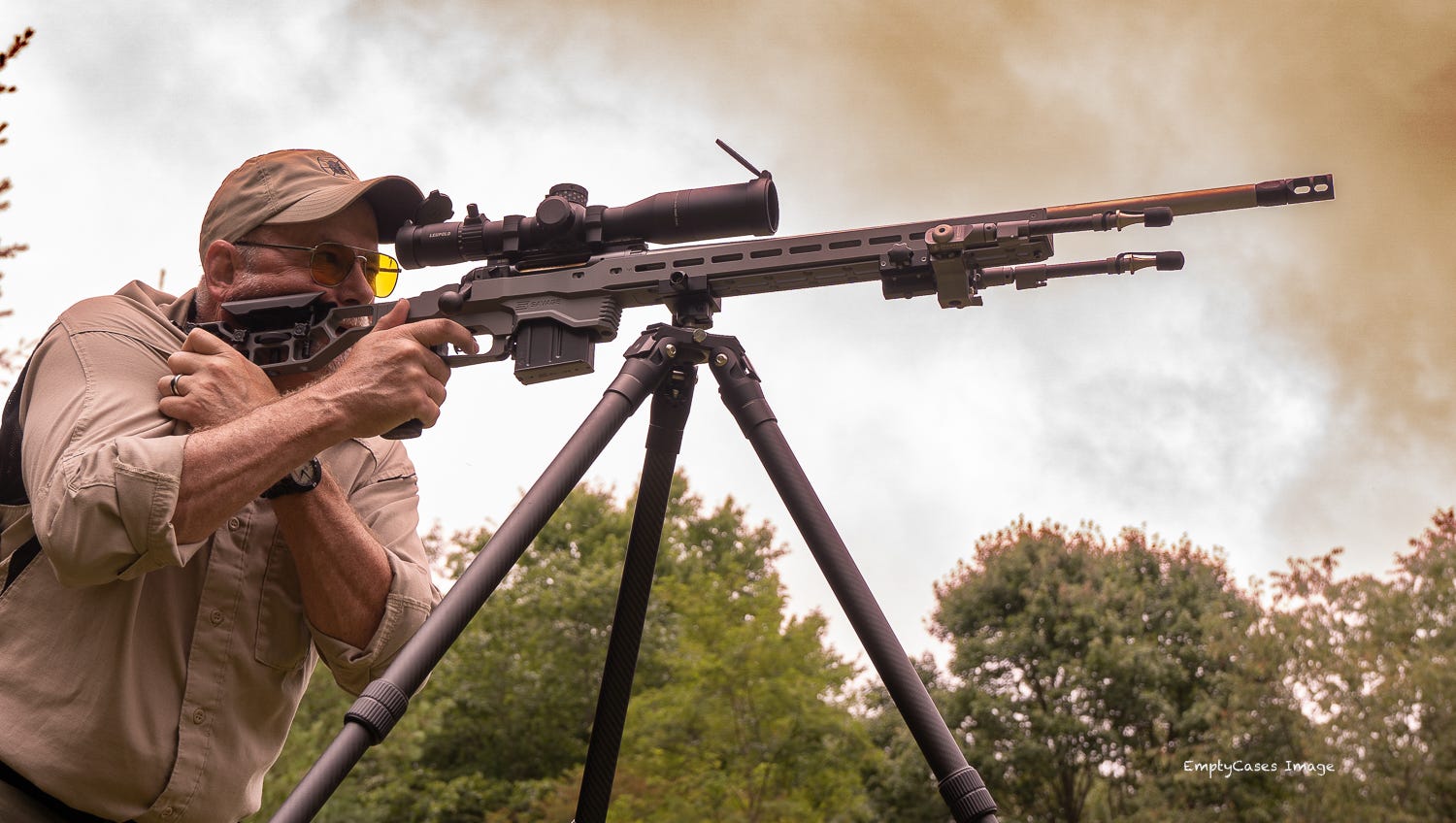
I’m not suggesting you ignore a rest to opt for an offhand shot—that would be, well, stupid—if you can get steadier, get steadier. Recognizing a better shooting position and using it is also part of being a rifleman. However, real rifle shooting skill should be measured when shooting off hand as opposed to shooting with aids that eliminate human error, because overcoming human error without the aid of support is what rifle shooting is all about.
I’ll also add that true rifleman skill is something that must be practiced—continually—and that it is also something that will degrade with age and physical ability. For me, this means that in some cases I cannot get as close as I might once have been able to, and that I also might need to get steadier in situations where at one time I would have not had to. Because of two bad knees I am not the rifleman I once was. I must accept that and compensate for it as opposed to thinking my use of shooting supports makes me as good as I once was. Someday I may need some sort of support to shoot with accuracy no matter the situation. When that happens, I won’t be a real rifleman anymore, but hopefully I’ll still be able to remember when I was, tell stories about it, and maybe help others become one.
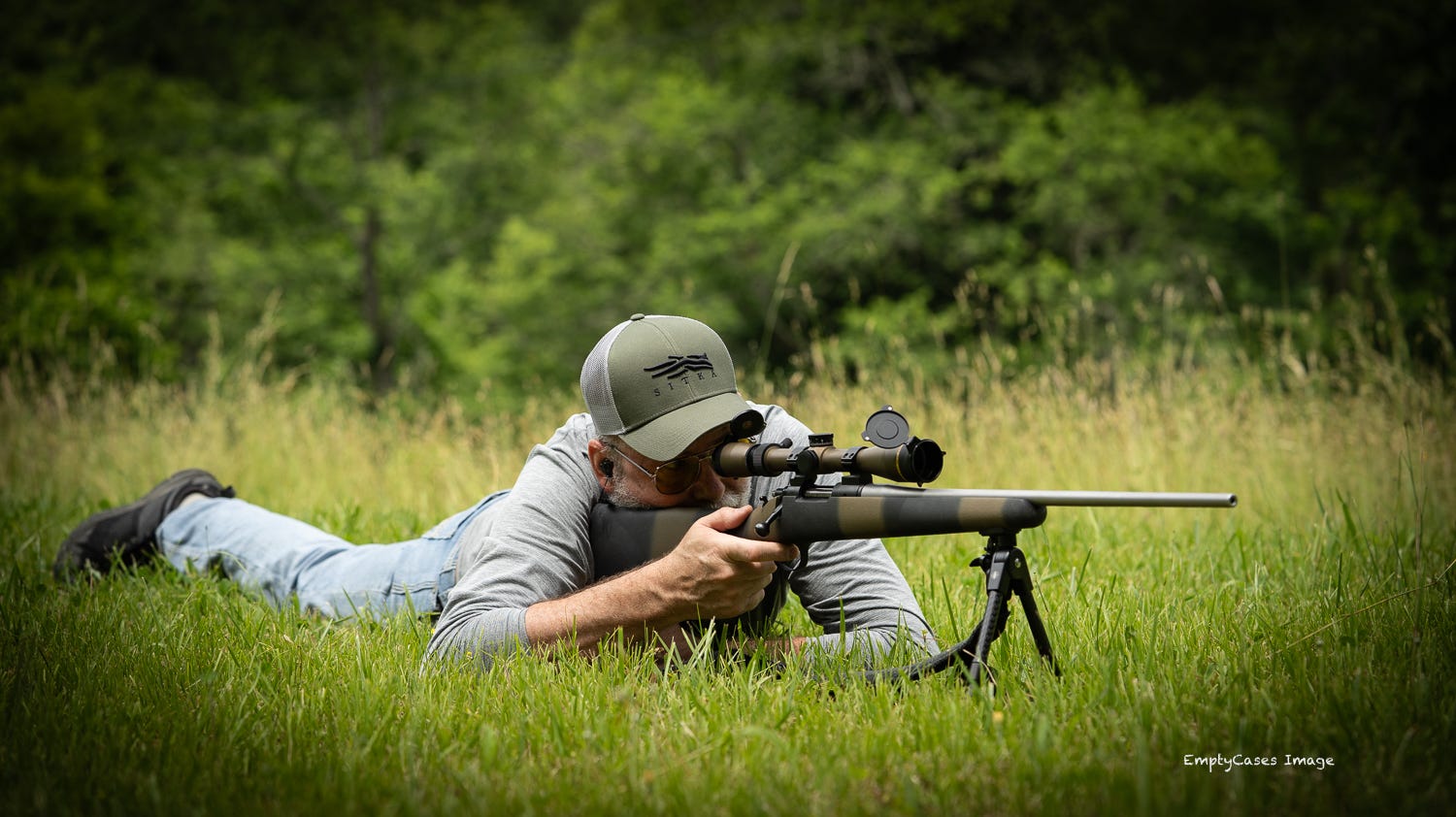
To me, being a real rifleman means you have the requisite skill to command your rifle at will, with the ability to deliver accurate shots on target without the aid of shooting supports. If I were going to devise a test to determine if someone was a rifleman or not, it would be a very simple test because as Jeff Cooper also so astutely observed, the purpose of shooting is hitting. If you can start standing on your hind legs with your rifle at high ready—eyes muzzle, target—and with a single shot hit a 50 square inch target—an eight inch steel plate—at 100 yards in less than five seconds, in my mind you have demonstrated true rifleman skill. If you miss, you simply need more practice.
You can brag all you want about how you have used shooting support accessories to eliminate human error as much as possible to make a good shot. If you recognize that’s what you need to do to assure a good hit and you do it, you are a wise man. However, for me, a rifleman can eliminate a lot of human error with his body, and he knows how close he must get to make this a reality. The ability to do this comes from practice and it is how riflemen are made, and mastery is obtained.
By all means, you should use whatever is necessary to allow you to get closer and steadier for a sure shot, but at the same time, if you want to be a rifleman learn how to shoot with nothing but your body—and maybe a sling—supporting the rifle. Those who witness that skill might even call you “Hawkeye.” When that name is earned without the aid of shooting sticks, tripods or sandbags, you’re not a pretender and it is a name you can be proud of.

Cade is a practical guy who understands marksmanship and the Scout Rifle.
A man don't need that much. As Dean Martin so eloquently sang in Rio Bravo - my rifle, my pony and me.